
Connecting Edmonton Scrap Metal Searches With the Right Collection Service
A facility manager with a full scrap bin and a homeowner with an old vehicle in the driveway both search for scrap metal collection, yet they need quite different things. This strategy example looks at how an Edmonton metal recycling business could guide each of them to the right enquiry route.
Let's Talk About Your Business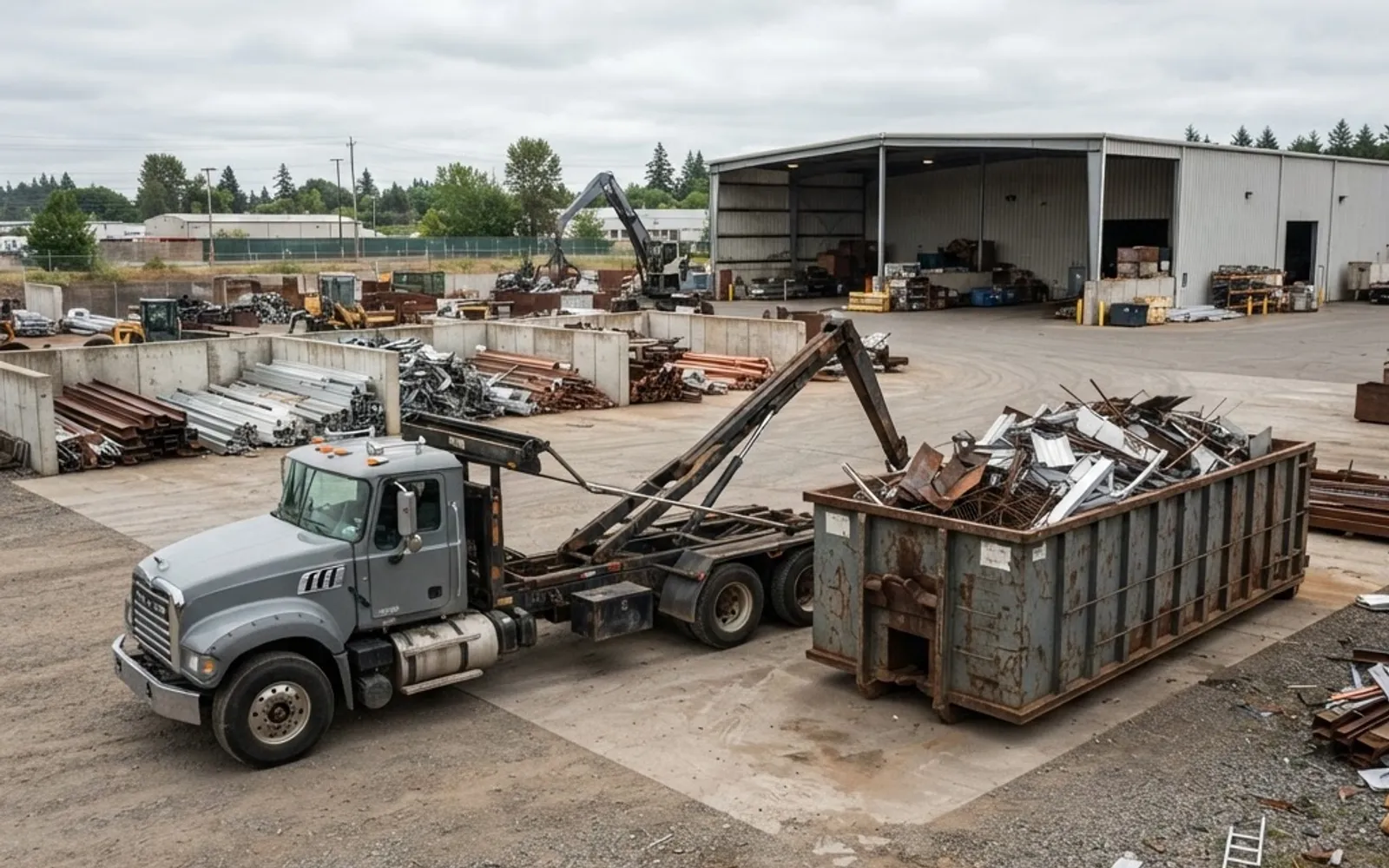
This is an SEO strategy example, not a client case study. It describes how we would approach this type of business. It does not report results, and the image is illustrative.
Project Overview
- Business type
- Scrap metal collection and recycling service
- Location
- Edmonton, Alberta
- Objective
- More qualified enquiries for commercial scrap and vehicle collection, and more completed pickups
- Services involved
- Service page separation, Google Business Profile alignment, Enquiry form design, Outcome tracking
One Form, Two Very Different Requests
On a Monday morning the office receives two enquiries from the same contact form. One is from a small manufacturer with offcuts and machined waste, asking about regular collection. The other is from a homeowner who wants an unwanted vehicle removed.
Both messages are one line long. Neither says how much material there is, where it is or whether a truck can reach it. The team spends the morning phoning back for details, and some of those people never answer.
Why Vague Enquiries Cost Time
Commercial scrap and vehicle collection involve different equipment, different paperwork and different customers. When a website treats them as one service, visitors cannot tell whether the company handles their situation, and staff pay the price in follow-up calls.
Measurement is another weak point. A form submission is not a completed collection. If success is counted at the form, the business cannot tell which searches and pages lead to actual pickups.
Wasted trips add to the cost. A truck sent to a locked gate, or to a vehicle that cannot be reached, burns time and fuel on no work at all. Better information up front is among the cheapest efficiency gains available.
The Approach We Would Take
Our approach would be to split the two audiences early and collect exactly what each collection requires.
Distinguish commercial scrap from vehicle services
Each would have its own page and its own search focus. Commercial pages would speak to businesses with ongoing or one-off scrap. Vehicle pages would speak to individuals and fleets with vehicles to remove.
Explain accepted materials and collection requirements
Pages would list the metals and items the company accepts, what it does not, any minimum quantities and what customers need to prepare. We would include only requirements the company confirms. Vehicle pages would explain the documents the company requires, as the company states them.
Align the Google Business Profile with the website
The services and categories on the profile should match the pages on the site. A customer who sees "vehicle removal" on the profile should land on a page about it, not a general scrap page.
Create separate enquiry paths
Commercial and vehicle enquiries would use different forms, so each can ask relevant questions and reach the right person in the team.
Capture what the crew needs to know
Forms would ask for material type, approximate quantity, pickup location and access details such as gate restrictions or ground conditions. These answers help the company decide whether and how to send a truck.
Local Context: Edmonton's Industrial Area and Winters
Edmonton has extensive industrial areas, and customers can be located well outside the city centre. Winter conditions can also affect access to yards and driveways. Where the company serves communities such as Sherwood Park or St. Albert, it would say so. Where it does not, it should not imply otherwise.
How We Would Measure Success
We would follow enquiries from first contact through to the completed pickup, with the company recording the outcome of each one in a simple log.
- Commercial enquiries: Forms and calls from businesses, counted separately from vehicle requests.
- Vehicle enquiries: Forms and calls about vehicle removal, counted on their own.
- Qualified calls: Calls the team classifies as genuine new enquiries within the service area.
- Completed pickups: Enquiries that result in a collection, which is the outcome that actually matters.
Looking at enquiries and completed pickups side by side shows whether the website is attracting work that can be done.
Practical Lessons for Similar Businesses
- If two customers need different things, give them different pages and forms.
- Ask for quantity, location and access before sending a crew.
- Keep your listing and website describing the same services.
- Track completed jobs, not just enquiries.
Frequently Asked Questions
Explore our SEO services in Edmonton
Related services: Local SEO services · Google Maps optimisation
Related strategy example: Making Transport Services Easier to Find and Request in Richmond, BC. A related strategy example about collecting load and location details before quoting.