
Helping Surrey Parents Move From Childcare Searches to Centre Tours
Parents searching for childcare are rarely browsing. They are trying to solve a real scheduling problem while feeling responsible for a very important decision. This strategy example shows how a Surrey childcare provider could present clear, honest information that helps a parent move from a search to a centre tour.
Let's Talk About Your Business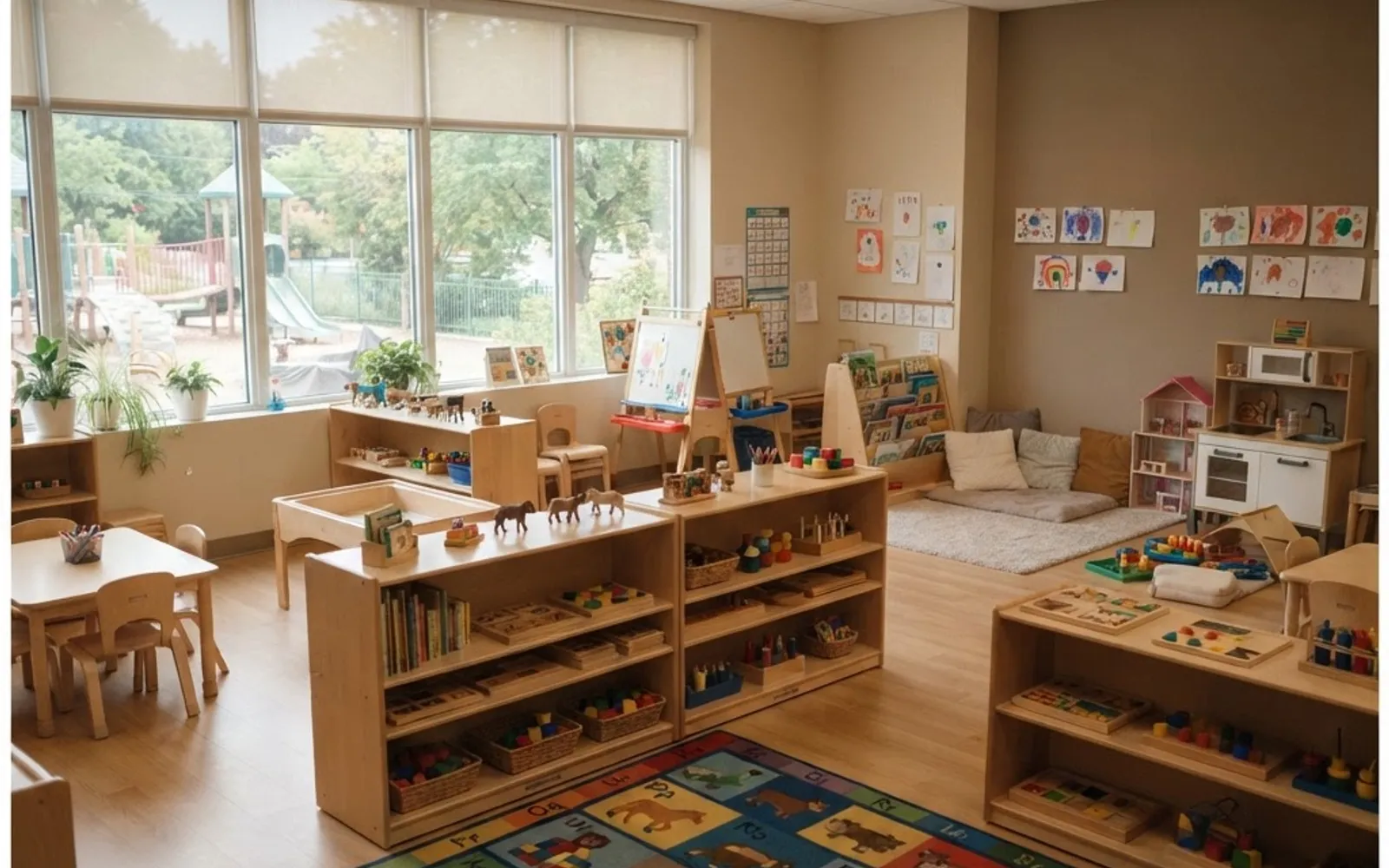
This is an SEO strategy example, not a client case study. It describes how we would approach this type of business. It does not report results, and the image is illustrative.
Project Overview
- Business type
- Childcare provider with one or more centres
- Location
- Surrey, British Columbia
- Objective
- More tour enquiries from families whose needs match the centre's programmes
- Services involved
- Programme and location pages, Local SEO, Mobile form design, Content planning
A Search Made at Lunchtime
A parent is on a short break at work, scrolling on a phone. Their child is eighteen months old, and a return-to-work date is approaching. They search for childcare near home and open three websites in separate tabs.
They are looking for a handful of facts. Does the centre take toddlers? What are the hours? Is there a space? How do I see it in person? One site answers those questions in the first screen. Another buries them in a brochure PDF. The third has a lovely photo and a phone number, and the parent cannot call until their break is over.
What Parents Need Before They Will Book a Visit
Childcare is an emotional and logistical decision. Parents want reassurance that the centre suits their child's age, fits their daily route and has people who will answer honest questions. They also need the process to be easy, because many are researching in short, interrupted bursts.
Common website problems are predictable: age groups described vaguely, locations mixed together on a single page, availability information that is out of date and enquiry forms that ask for more than a busy parent will type on a phone.
The Approach We Would Take
Our approach would be to organise information the way parents think about it, and to keep every step easy to complete on a small screen.
Organise content around programmes and age groups
Parents tend to think in terms of age and stage, not internal programme names. We would build pages around the age groups the centre actually serves, explaining the daily rhythm, what children do and how the programme differs from the next age band.
Give each real location its own page
If the provider operates several centres, each would have its own page with its address, hours, programmes offered and a description of the arrival and drop-off experience. This helps parents choose a location and gives each centre its own chance to appear in local search.
Use accurate availability and waitlist wording
Availability changes. We would agree a simple process for staff to keep wording accurate, such as stating that spaces vary by age group and inviting parents to ask about current openings. An out-of-date "spaces available" message creates disappointment.
Explain what a tour involves
A short section describing how long a visit takes, who parents will meet and what questions are welcome removes a lot of hesitation. Parents are more willing to book when they know what to expect.
Keep the tour request form short
Name, child's age, preferred centre, preferred start date and a contact method are usually enough. Anything longer can wait for the conversation that follows.
Answer practical questions without inventing details
Licensing, staffing, ratios, fees and meals are matters of fact. We would publish only what the provider supplies and confirms, and we would never write these details ourselves.
Local Context: A Large, Spread-Out City
Surrey covers a large area with distinct neighbourhoods, and families often choose childcare close to home or along a commute. That makes location-specific pages more useful than one general page. We would reference neighbourhoods only where a centre actually sits.
How We Would Measure Success
Childcare enquiries are personal, so we would focus on a small number of clear indicators and review them alongside the centre's own records of tours and enrolments.
- Tour enquiries: Completed tour request forms and calls asking to visit.
- Programme-specific enquiries: Which age groups families ask about, to show whether programme pages are doing their job.
- Location-page conversions: The share of visitors to each centre page who request a tour.
We would also check mobile form completion, since a form that is abandoned halfway tells us as much as one that is submitted.
Practical Lessons for Similar Businesses
- Write for the parent's question, not the organisation's structure.
- Keep availability wording honest and easy to maintain.
- Design the form for a thumb, not a keyboard.
- Never publish licensing or programme claims you cannot verify.
Frequently Asked Questions
See how we support businesses with Surrey SEO
Related services: Local SEO services · Web design services
Related strategy example: Helping Vancouver Families Find Speech Therapy That Fits Their Needs. Another strategy example about explaining services clearly to worried parents.