
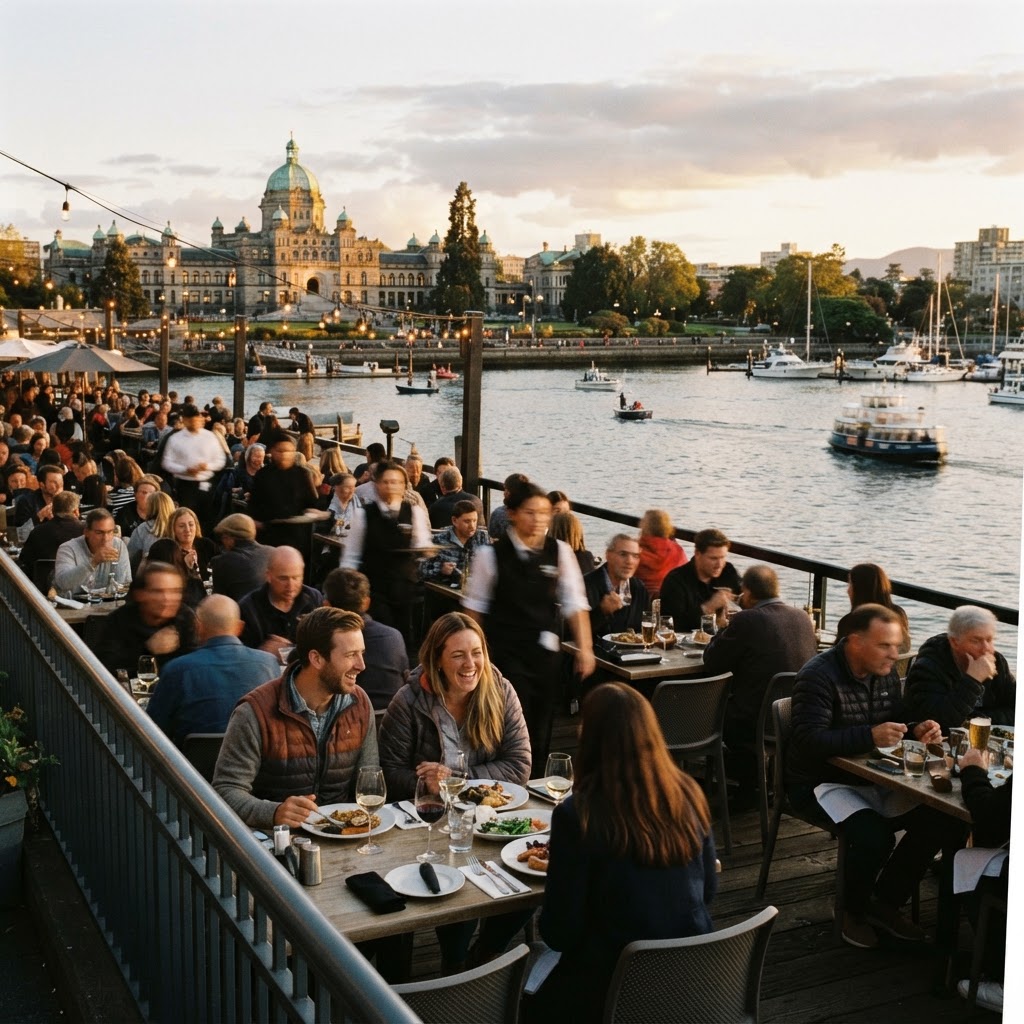
How a Victoria Restaurant Group Grew Reservations 180% With Local SEO
Five Victoria restaurants, one brand, and a fraction of the search visibility their food deserved. A multi-location local SEO strategy filled tables across all five.
Restaurant Search in Victoria
Victoria is one of the most competitive restaurant cities in Canada per capita — a food town with a tourist economy layered on top of a demanding local one. Almost every restaurant decision now starts with a search: locals comparing options, visitors deciding where to eat before they arrive, and both groups choosing from what they find in the map results and the first page.
For a restaurant group, the stakes multiply. Five locations means five neighbourhoods of local search, five profiles to maintain, and a common failure mode: managing the brand as one business while Google ranks each location on its own.
The Challenge
The group's restaurants were well reviewed by the people who found them — and found mostly by people who already knew them. Their Google Business Profiles were inconsistent: some complete, some barely claimed, none with a deliberate review process. Menus lived as image files that search engines could not read and phones loaded slowly. Each location's page on the group website was a name, an address, and a phone number — nothing that could rank for its own cuisine, its own neighbourhood, or its own dishes.
Meanwhile, newer restaurants with thinner food but sharper digital operations were capturing the searches.
The SEO Strategy
Five Complete Local Presences
Each restaurant received the full treatment as an independent location: rebuilt Google Business Profiles with correct categories and cuisine signals, consistent citations, real photos of each room and each plate, and a simple review process that turned each happy table into a steady flow of genuine reviews, professionally answered.
Location Pages Worth Visiting
Each restaurant's page on the site was rebuilt to stand on its own: the room, the menu philosophy, the neighbourhood, and — most importantly — its actual menu as fast-loading text. Dishes began appearing in search themselves, and each location page could rank for its own cuisine and neighbourhood terms instead of leaning on the brand alone.
Reservation Paths With No Friction
Every search touchpoint was rebuilt toward one action: book a table. Menus load fast on phones, reservation links sit beside every page's content, and directions are one tap from every profile. The measure of restaurant SEO is covers, and every change served it.
The Results
Four months after the work began:
- Reservation traffic grew 180% across the five locations.
- Organic traffic grew 150%, concentrated on the reservation paths.
- 45 keywords on page one, including cuisine and neighbourhood searches for each location.
- Every location now competes in its own neighbourhood instead of the strongest one carrying the rest.
Visitor-season bookings grew, but the more valuable shift was local: weekday covers, previously the group's weak spot, filled with diners who found the rooms the way tourists always had.
Why This Worked
Restaurants win search by making the decision easy: complete profiles, readable menus, real photos, and a booking path with no friction — for every location, every time. None of it is complicated; almost none of it gets done properly. That gap is why this strategy works, and why it keeps working.
Looking for the same results in Victoria? See our Victoria SEO services.
CLIENT REVIEWS
What Our Clients Say
"Burden Marketing completely transformed our online visibility. Within four months we were ranking on page one for our most important keywords. The phone hasn't stopped ringing."
Michael T.
Small Business Owner
"We'd tried two other SEO agencies before. Burden was different — data-driven, transparent, and they actually delivered. Our leads from Google doubled in under six months."
Sarah K.
Home Services
"The team understands the Canadian market in a way no other agency we've worked with has. They knew exactly which keywords mattered in our city and went after them strategically."
James L.
Professional Services
FAQ